Who Decides What's Real: Underground Music Credibility in the Age of the Algorithm Tastemaker
For a long time, if you wanted credibility in underground music, you knew exactly who to impress. Get a favorable review in a respected print zine. Get played on a college radio station with the right reputation. Have the right distro carrying your tape. Get shouted out by a scene elder whose opinion carried weight in the specific corner of the underground you inhabited. The hierarchy was informal but it was real, and everyone who cared knew how it worked.
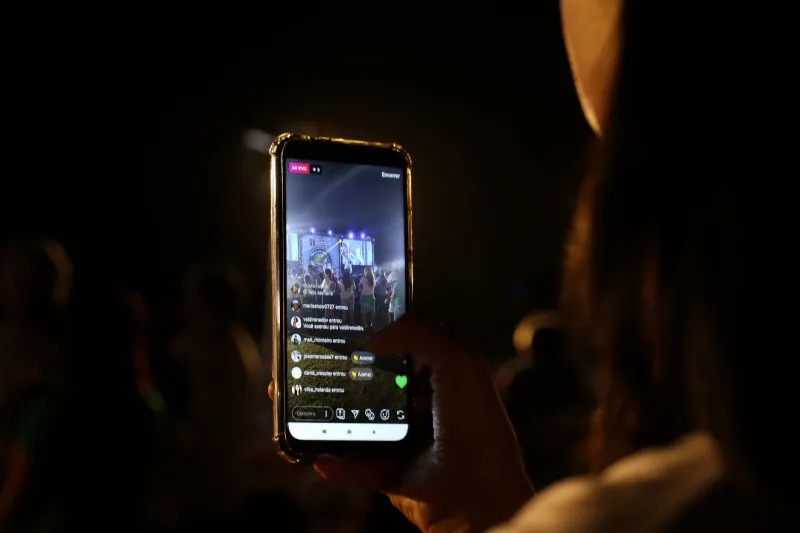
That hierarchy hasn't disappeared. But it's been complicated — sometimes productively, sometimes not — by a new class of tastemaker operating out of TikTok, YouTube Shorts, and the sprawling Discord servers that have become the town squares of niche music culture. The conversation about who gets to decide what's authentic, what's underground, and what's worth your attention is louder and messier than it's ever been. And for dark music scenes in particular, where identity and exclusivity are deeply intertwined, the stakes feel unusually high.
The Old Guard and What It Actually Did
It's worth being honest about what traditional underground music criticism provided before we eulogize it. At its best, it offered depth — writers who had spent years in a scene, who understood the genealogy of a sound, who could place a new record in genuine historical context and tell you exactly why it mattered or didn't. A great review in a publication like Terrorizer or a thoughtful column in a regional zine could open doors, shift perceptions, and introduce a band to exactly the right audience.
At its worst, it was a closed club with its own politics, biases, and blind spots. Access to those gatekeepers was uneven. Bands without label connections or geographic proximity to the right cities were often invisible to critics who could have championed them. The "underground" that got coverage was frequently a curated version of the underground — the parts that were already connected to the right networks.
So when people say the old gatekeepers served the scene, they're partially right. And when people say those same gatekeepers kept a lot of legitimate artists out, they're also partially right. Both things are true simultaneously, and that tension is essential context for understanding what's happening now.
The New Tastemakers and How They Work
The TikTok music discovery ecosystem is genuinely strange if you spend time in it. Alongside the mainstream content, there are micro-communities doing serious, knowledgeable work — accounts dedicated entirely to dungeon synth deep cuts, channels that review black metal demos with the same rigor a film critic brings to arthouse cinema, Discord servers where hundreds of people debate the authenticity of post-industrial releases with a passion that would make academic music scholars envious.
These creators are often not critics in any traditional sense. They don't have editorial backing or fact-checkers. They built audiences because they're genuinely obsessive about specific sounds, and that obsession reads as authentic in a media landscape where polish is often correctly identified as performance. A 90-second video of someone holding a tape they clearly love, talking about why it sounds like nothing else they've heard this year, can move more units than a 2,000-word review in a publication with ten times the audience.
The reach is real. Artists in genuinely obscure subgenres — scenes that might have 500 serious listeners nationwide — have had releases go semi-viral within those communities after getting picked up by the right niche account. For an independent artist who pressed 200 copies of a cassette, that kind of targeted exposure is more valuable than broad coverage that reaches the wrong people.
The Authenticity Problem
Here's where it gets complicated. Underground dark music scenes have always policed authenticity — sometimes productively, often toxically — and the new tastemaker ecosystem has created new vectors for that policing. The question of who gets to declare something "real" or "legit" within a subgenre is now being answered by creators with follower counts and engagement metrics, and that introduces dynamics that feel uncomfortable to a lot of people who've been in these scenes for a long time.
When a TikTok account with 80,000 followers declares a particular artist the next essential voice in a subgenre, that declaration carries weight regardless of whether the person making it has the deep scene knowledge to back it up. Artists can get elevated — or dismissed — by tastemakers who may be genuinely passionate but who lack the context that would make their judgments meaningful. And because engagement rewards confident takes, nuance is often the first casualty.
There's also the visibility paradox that haunts these conversations. Underground scenes derive part of their identity from being underground. When a tastemaker with real reach blows up a small, insular scene, they often change the thing they loved about it. New listeners arrive without the cultural knowledge that made the community work. The sound gets flattened and imitated. Labels notice. The cycle that has eaten subgenres throughout music history — discovery, popularity, commercialization, abandonment — accelerates.
Discord as the New Zine
If TikTok is the discovery layer, Discord is where the real conversations are happening. The servers dedicated to specific dark music subgenres are some of the most genuinely community-driven spaces in contemporary music culture. They're moderated by enthusiasts, not algorithms. Membership is often selective — you have to demonstrate knowledge and good faith to gain access to the inner channels where the serious discussion lives.
In these spaces, credibility is still earned the old-fashioned way: by knowing things, sharing things, and being consistently present over time. A recommendation from someone who's been contributing to a server for two years carries more weight than a viral video. The community has developed its own internal reputation systems that look, in some ways, remarkably like the old underground hierarchies — just distributed across digital space instead of physical geography.
The tension between these two worlds — the broad, algorithm-driven discovery layer and the intimate, knowledge-gated community layer — is the defining dynamic of underground music culture right now. Neither is going away. Learning to navigate both, as an artist or a listener, is increasingly the skill that determines who thrives in these scenes and who gets lost in the noise.