Into the Void: Why Dark Musicians Are Trading Studios for Caves, Ruins, and Forgotten Spaces
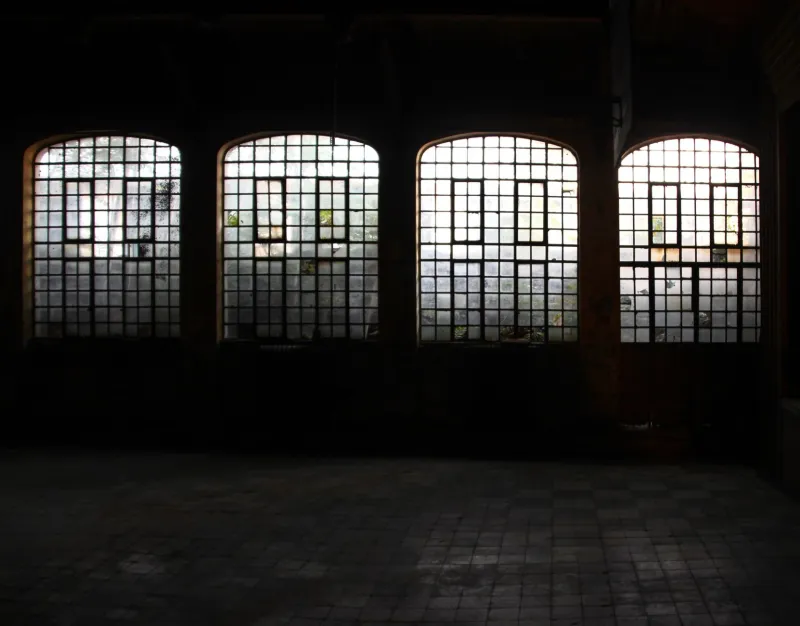
Somewhere in the American Midwest, a musician is setting up microphones in the nave of a long-abandoned church. The plaster is falling. There are birds nesting in the organ. The natural reverb of the space — stone walls, vaulted ceiling, decades of silence — is unlike anything that can be replicated with a plugin, and that's exactly the point. The session isn't booked. There's no engineer on the clock. And if you asked them to explain why they drove four hours to record in a condemned building instead of a proper studio, the answer would take a while.
This is the reality of a practice that's been growing steadily in underground dark music communities across the country: recording in unconventional, often unauthorized spaces as both an aesthetic strategy and a philosophical position. Caves in Appalachia. Decommissioned grain elevators in the Plains states. Drainage tunnels under Southwestern cities. Industrial ruins in the Rust Belt. The spaces are specific, the motivations are layered, and the music that comes out of them sounds like nowhere else on earth.
The Sound of a Space That Wasn't Built for Sound
Start with the purely sonic argument, because it's the most immediately legible. Every recording space has a character — a set of acoustic properties that color every sound made within it. Professional studios spend enormous amounts of money engineering those properties to be neutral, controllable, predictable. That's useful for a lot of music. It's antithetical to what a growing number of dark music artists are after.
A natural cave system produces reverb that no plugin has convincingly replicated. The decay is uneven, the frequency response is strange, and the way sound bounces off irregular stone surfaces creates a spatial quality that sounds genuinely ancient because it is. A grain silo produces a cavernous, almost hallucinatory bloom on sustained tones. An empty swimming pool reflects sound in ways that are disorienting and deeply compelling when you're recording drums or voice.
Artists working in atmospheric black metal, dark ambient, neoclassical, and experimental drone have been chasing these textures for years. The difference now is that a generation of musicians has grown up with portable, high-quality recording equipment that makes capturing those spaces feasible without a major budget. An interface, a pair of quality microphones, a laptop, and a willingness to haul gear somewhere difficult — that's the entire technical requirement. The rest is location scouting and nerve.
The Philosophical Dimension
But the sonic argument only goes so far. Talk to the musicians doing this work long enough and a different motivation surfaces — one that's harder to articulate but clearly real. There's a rejection happening here. A refusal.
Professional recording infrastructure is, at this point, deeply integrated with corporate systems. Major studios are owned by entities with connections to streaming platforms, publishing conglomerates, and sync licensing operations. Even the software used to record and mix — the DAWs, the plugins, the metering tools — is produced by companies that collect usage data, require cloud authentication, and operate within a surveillance economy that many underground artists find philosophically intolerable.
Recording in an abandoned industrial space with locally powered equipment, no internet connection, and no booking records creates a kind of sonic sovereignty that resonates with artists who feel the music industry's entire infrastructure is designed to extract from them. It's not paranoia — it's a principled response to a real dynamic. The music made in these spaces exists, at least in its creation, entirely outside those systems. That matters to people for whom the underground isn't just a genre category but an actual way of operating.
The Legal Gray Zone
Let's be clear about something that often gets romanticized out of these conversations: recording in abandoned or unauthorized spaces is frequently illegal. Trespassing laws vary by state, but entering a condemned building or a privately owned industrial ruin without permission is a real legal risk. Some municipalities have begun specifically targeting urban explorers and the adjacent communities — including musicians — who use these spaces.
Artists who do this work navigate that reality in different ways. Some obtain permission from property owners — often easier than you'd expect, since many owners of derelict properties are indifferent to non-destructive use. Some work in genuinely public spaces like national forest cave systems, where recording for non-commercial purposes exists in a murkier but more defensible legal position. Others simply accept the risk as part of the practice and take precautions accordingly.
The legal ambiguity is, for some, part of the point. Making music in spaces that weren't meant for it, in ways that weren't sanctioned, is a continuation of an underground tradition that has always operated at the edges of what's officially permitted. The history of dark music is partly a history of people doing things in basements, warehouses, and parking lots because they didn't have access to legitimate venues and eventually didn't want them.
What the Spaces Do to the Stories
There's a third dimension to this practice that's easy to overlook: the way recording in specific, loaded spaces shapes the narrative and mythology of the music itself. A black metal record made in a Norwegian forest carries a different weight than one made in a suburban studio, even if the recordings are technically identical. The location is part of the story, and the story is part of the music's meaning within its community.
Artists who record in ruins, caves, or industrial sites are making a similar choice. The space becomes a collaborator. Its history — what was built there, what happened, what was abandoned and why — bleeds into the work in ways that are sometimes explicit and sometimes just present, like a smell you can't quite identify. Listeners in dark music communities are attuned to this. They ask where things were recorded. They want to know what the space was. The answer shapes how they hear the music.
This isn't nostalgia or affectation. It's a serious engagement with the idea that music exists in physical and historical context, and that context matters. In an era when most music is made in acoustically treated rooms and heard through earbuds on a subway platform, making something in a place that has weight and history and strangeness is a genuine act of resistance. The void, it turns out, has a lot to say.