Press It Yourself: How Underground Artists Are Turning Vinyl Into a Survival Strategy
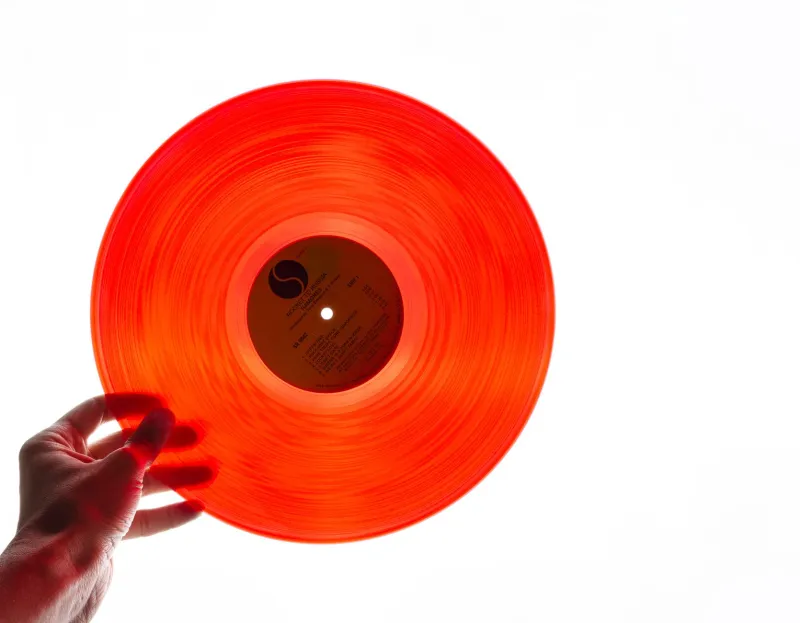
There's something almost defiant about holding a record you made yourself. Not a download. Not a stream. An actual slab of wax with your name on the label, hand-numbered in silver marker, sealed in a poly sleeve with a photocopied insert that smells faintly of a copy shop at midnight. For a growing number of dark and underground artists across the US, that object isn't just a format choice — it's a financial lifeline and a statement of intent.
The DIY vinyl pressing movement has been building quietly for years, but in the last two or three it's hit something close to critical mass. Artists working in black metal, dungeon synth, industrial, post-punk, and a dozen other shadow-adjacent genres are bypassing traditional distribution entirely and going straight to their listeners with limited, often hand-assembled records. The economics are brutal, the logistics are a headache, and the wait times at pressing plants are long. People are doing it anyway.
The Numbers Behind the Obsession
Let's talk money, because that's usually where this conversation starts and ends when you're running a one-person operation out of a spare bedroom. A standard run of 300 copies — the sweet spot for a lot of underground artists — will run you somewhere between $1,500 and $2,500 depending on the plant, the color of the vinyl, and how fancy you get with the packaging. That's a real upfront cost for someone who isn't pulling in label advances.
But here's the math that's converting skeptics: if you sell those 300 copies direct at $25 to $35 each, you're looking at $7,500 to $10,500 gross. Even after costs, that's a margin that streaming will never touch. A million streams on Spotify nets most independent artists somewhere between $3,000 and $4,000. A sold-out pressing of 300 records can beat that and actually build something — a collector base, a mailing list, a relationship with people who care enough to own the physical thing.
Small pressing plants like Pirates Press in San Francisco and Furnace Record Pressing in Virginia have become essential infrastructure for this ecosystem. Wait times have stretched — sometimes to nine months or more — but artists are planning around it, treating pressing runs like seasonal drops rather than traditional release cycles.
Color, Scarcity, and the Collector Brain
If you've spent any time in underground music communities on Bandcamp or in the Discord servers that orbit specific subgenres, you already know that colored vinyl variants have become their own subculture within a subculture. Splatter pressings. Half-and-half splits. Marbled black and oxblood. Bone white with red haze. The names alone sound like they belong on a tracklist.
This isn't just aesthetics, though the aesthetics matter enormously in spaces where visual identity and music are inseparable. Limited color variants create genuine scarcity, and scarcity drives the kind of urgency that makes a release feel like an event. Artists will press 100 copies of a standard black variant and 50 copies of a "true cult" color variant numbered by hand. The color variant sells out in hours. The standard edition follows within days. The whole run is gone before the algorithm even notices it existed.
Collectors — and there are deeply serious collectors in these scenes — will pay secondary market prices for variants they missed. A record that pressed for $30 can move for $80 or $100 on Discogs six months later if the run was small enough and the artist has the right reputation. That secondary market activity feeds back into demand for the next release. It's a flywheel, and once it's spinning, it's genuinely powerful.
The Craft Side of the Equation
Beyond the economics, there's something happening on the craft level that matters to a lot of the artists doing this. Pressing your own record forces you to think about the listening experience as a designed object. Running time per side affects audio quality — you can't cram 45 minutes onto a 12-inch at 33 RPM and expect it to sound good. So artists are making sequencing decisions, pacing decisions, decisions about silence and space that streaming completely removes from the equation.
Packaging becomes part of the work. Hand-stamped sleeves, risograph-printed inserts, wax seals, zines tucked inside the jacket — these aren't extras, they're part of what the record is. Some artists are collaborating with visual artists and printmakers to create packages that function as art objects independent of the music. You're not just buying an album. You're buying into a world.
That philosophy resonates deeply in dark music communities where aesthetic coherence — the idea that the music, the visuals, the physical format, and the mythology all reinforce each other — is taken seriously in a way mainstream music culture mostly abandoned.
Building Community Through Scarcity
Maybe the most underappreciated dimension of the DIY vinyl boom is what it does for community. When you buy a hand-numbered record directly from an artist, something shifts in the relationship. You're not a listener. You're a participant. You're one of 200 people in the world who owns this specific object, and that shared ownership creates a real bond between strangers.
Artists who do this consistently — releasing small runs, communicating directly with buyers, occasionally including handwritten notes or surprise inserts — end up with something that a major label A&R rep couldn't manufacture if they tried: genuine loyalty. Not followers. Not monthly listeners. People who will show up for every release, tell their friends, and keep the underground alive one record at a time.
That's not nothing. In an era where the music industry's entire infrastructure is optimized to extract value from artists and return as little as possible, pressing your own records is a small act of reclamation. It's loud, it's physical, and it leaves a mark.