Hold the Line: How Underground Dark Venues Are Fighting to Stay Alive in a Gentrifying America
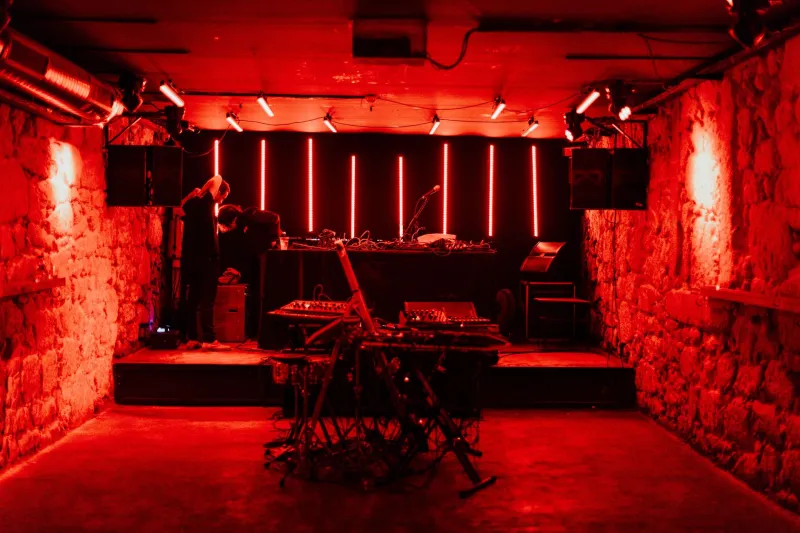
There's a particular kind of grief that hits when a venue closes. Not the polished, air-conditioned kind of grief — the raw, disorienting kind. The kind where you walk past a boarded-up storefront and still hear the kick drum in your chest from a show you saw there six years ago. For anyone who's built their identity around underground dark music in the US, that grief is becoming a recurring experience.
From Chicago's Wicker Park to Brooklyn's Bushwick to the fringes of Los Angeles, the small, fiercely independent spaces that have long served as incubators for goth, industrial, black metal, noise, and experimental music are being squeezed out. Landlords are cashing in. Condos are going up. And with them, entire ecosystems of sound are being erased.
The Economics of Darkness
Running a small underground venue has never been a path to wealth. Anyone who's tried it will tell you that. But what's changed in the last five years — and especially since 2022 — is that the margin for error has basically collapsed.
In cities like Austin and Denver, neighborhoods that once tolerated loud, weird, late-night spaces have transformed almost overnight. Commercial rent hikes of 30 to 50 percent aren't unusual. And unlike a restaurant or a boutique gym, a 200-capacity black-box venue hosting a Thursday night ritual ambient set can't just pass costs on to customers without losing its core audience entirely.
"Our crowd isn't coming to spend $25 on cocktails," says one Chicago venue manager who asked to remain anonymous while lease negotiations are ongoing. "They're coming because this is one of the only places in this city where they feel like themselves. The moment we start pricing it like a bar in River North, we've already lost."
That tension — between solvency and soul — is at the center of nearly every conversation happening in underground venue communities right now.
What Gets Lost When the Lights Go Out
It's tempting to frame venue closures as a real estate story. But ask the musicians who've built careers in these rooms, and the conversation shifts fast.
For artists working in dark and experimental genres, small independent venues aren't just performance spaces. They're the infrastructure of a scene. They're where you hear about the touring act from Portland before anyone else does. They're where you meet the producer who'll collaborate on your next record. They're where you figure out, over years of attendance, what your own artistic identity actually is.
"I learned how to perform in a venue that held maybe 80 people on a good night," says a darkwave artist based in Philadelphia. "There was no algorithm telling people I existed. It was just the room and the people who showed up. When spaces like that close, new artists don't get that crucible. They get Instagram."
That loss of physical community infrastructure has ripple effects that don't show up in any city budget report. Genre knowledge dies with the spaces that housed it. Mentorship breaks down. The unspoken rules of how to behave, how to listen, how to support one another — all of it is transmitted through physical proximity over time. You can't Slack-channel your way to a scene.
Adaptation Strategies: What's Actually Working
Not every story is a eulogy. Some venues are adapting in ways that are genuinely interesting, even if they're born out of desperation.
A handful of spaces across the country have pivoted toward hybrid models — part venue, part record shop, part community event space. By diversifying revenue streams beyond door splits and bar tabs, they're creating enough financial cushion to weather slow months. Some have launched membership programs, essentially asking their most dedicated regulars to pay a monthly fee in exchange for perks and the knowledge that the space will still be there next year.
In New Orleans, one experimental venue started hosting daytime workshops on synthesis and sound design, attracting a broader demographic without compromising their nighttime programming. In Seattle, a collective of dark music promoters pooled resources to negotiate a shared lease on a warehouse space, splitting operational costs across multiple nights of programming per week.
"We basically had to become a nonprofit in spirit, even if not in structure," says a venue co-owner in Detroit. "We started thinking about what we're doing as preservation. Because that's what it is."
The City's Role — and Its Indifference
Here's the uncomfortable political reality: most US cities don't have meaningful policy frameworks for protecting cultural venues. A few — San Francisco, New York — have made noise about it. New York's Agent of Change law, which requires new residential developments near existing venues to absorb soundproofing costs, is one of the more concrete examples of policy actually protecting music spaces.
But for the most part, underground venues are operating without a safety net. They're not the kind of spaces that show up on tourism boards' promotional materials. They don't attract the kind of foot traffic that city planners celebrate. And when they close, there's no public mourning — just a quiet subtraction from the cultural fabric that most people won't notice until it's been gone for a decade.
The irony is brutal: these are exactly the spaces that create the cultural identity that makes cities interesting to live in — the thing that draws people and businesses in the first place. And they're being sacrificed to the very development boom that their existence helped fuel.
What Comes Next
The dark music community in the US isn't waiting for cities to figure this out. Mutual aid networks between venues are becoming more common. Underground promoters are sharing mailing lists, equipment, and contacts in ways that would've seemed unusual five years ago. There's a growing recognition that survival is collective.
Some are looking at unconventional spaces entirely — converting industrial buildings on city outskirts, partnering with arts organizations, or running mobile and pop-up events that sidestep permanent lease vulnerability altogether.
None of these are perfect solutions. But they reflect something real about the culture that built these spaces in the first place: a refusal to disappear quietly, a willingness to adapt without assimilating, and a stubborn belief that the music — and the community around it — is worth fighting for.
The rooms may change. The addresses may shift. But the sound, and the people who need it, aren't going anywhere.