Bedroom Architects: How DIY Producers Are Using Open-Source Tools to Rewire the Dark Music Industry
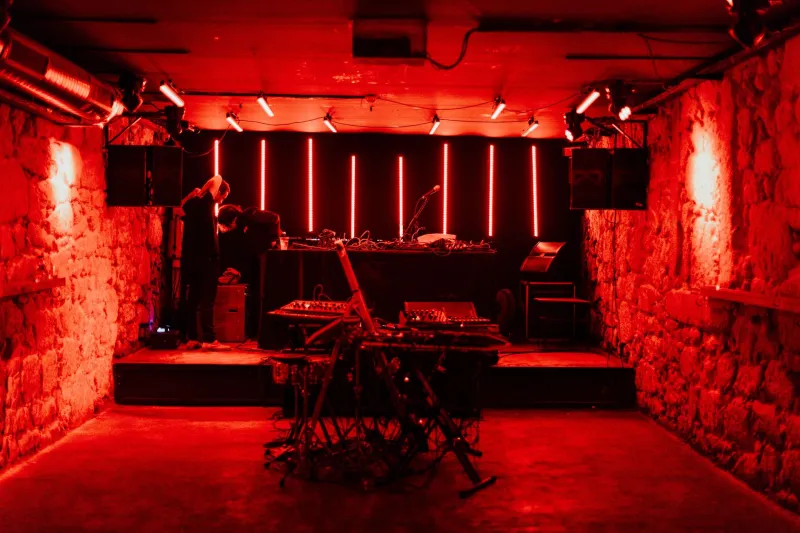
There's a studio in Bushwick that charges $150 an hour. There's another in Silver Lake that'll run you $200. Both are full of beautiful, expensive gear maintained by people who really know what they're doing, and both are largely inaccessible to the kind of artist who makes dark, experimental, and underground music — not because those artists lack talent, but because the economics simply don't work.
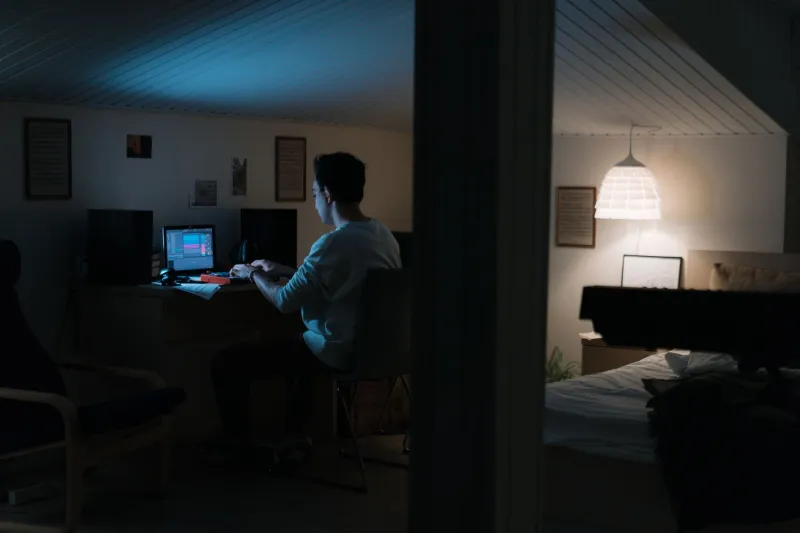
So they built their own studios. In bedrooms, in closets, in corners of shared apartments with moving blankets on the walls. And the music coming out of those spaces is, in a lot of cases, more interesting than anything being recorded in rooms that cost $200 an hour.
The Software Revolution Nobody Covered
The conversation around music production democratization tends to focus on affordable commercial software — your GarageBands and your FL Studios. What gets less attention is the parallel universe of open-source and free tools that have quietly become genuinely professional-grade options for producers willing to put in the learning curve.
Audacity, for all its old-school reputation, remains a workhorse for recording and editing. But the real depth is in software like REAPER — technically not open-source, but priced at $60 for a personal license and capable of doing everything a major-label production requires. Then there's the fully open-source world: Ardour for DAW functionality, VCV Rack for modular synthesis simulation, LMMS for beat-based production, and an ever-expanding library of free VST plugins that cover everything from vintage synthesizer emulation to granular processing to convolution reverb.
For dark music producers specifically — people making industrial, black metal, ritual ambient, noise, dark techno, and experimental electronic — these tools aren't compromises. They're often better suited to the aesthetic than commercial alternatives, precisely because they reward unconventional use and resist the kind of polished, quantized, corrected sound that major-label production tends to push toward.
"I've tried the expensive stuff," says a dark electronic producer based in Detroit. "And honestly, some of the open-source tools do things that the commercial software doesn't, or does worse. VCV Rack alone has changed how I think about sound design completely. And it cost me nothing."
Modular Synthesis: The Hardware Counterpart
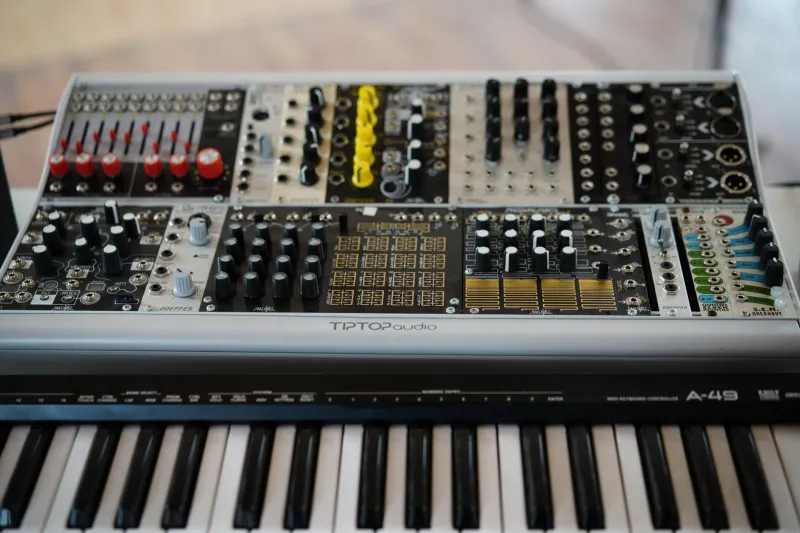
On the hardware side, modular synthesis has become something of a parallel economy within the underground music world. The Eurorack format — a standardized modular system that allows producers to combine modules from hundreds of different manufacturers — has exploded in the last decade, driven partly by the DIY electronics community.
Here's where it gets genuinely interesting for the dark music underground: a significant portion of Eurorack modules are available as DIY kits, where you buy the components and solder them yourself. The cost savings are substantial — sometimes 50 to 70 percent compared to pre-built equivalents. And the act of building your own instrument creates a relationship with the hardware that you simply can't replicate by unboxing something from Amazon.
Small companies like Befaco and Mutable Instruments (before it went open-source) have built devoted followings by making their designs available to the DIY community. The result is a global network of producers building genuinely unique instruments that don't exist anywhere else — hardware that produces sounds that have never been heard before, by definition, because the instrument that makes them was built by one person in one apartment in one city.
"When you build the thing that makes the sound, you understand it differently," says a noise artist in Austin who builds most of their own modules. "It stops being a black box. You know exactly why it behaves the way it does, and you know how to push it in directions it wasn't designed for. That's where the interesting stuff lives."
Control as Creative Principle
The practical benefits of DIY production — low cost, accessibility, flexibility — are real. But the underground producers who've committed most deeply to this path tend to talk about something else first: control.
When you make music in a major-label studio, you're operating inside someone else's infrastructure. The engineer has opinions. The producer has opinions. The A&R rep has opinions. The label has opinions about what the final product should sound like, who it should appeal to, and how it should be marketed. Even the most artist-friendly major-label deal involves a significant surrender of autonomy.
DIY production eliminates all of that. The bedroom producer owns the master recordings. They own the publishing. They decide when to release, how to price, and what platform to use. There's no one to approve the artwork, no one to veto the album title, no one to suggest that maybe the 22-minute drone piece should be edited down to something more digestible.
"The label system is built on the premise that artists need someone else to execute their vision," says an independent industrial producer in Chicago. "And for a certain kind of music, in a certain kind of era, that was true. But that's not where we are now. I can record, mix, master, design, and distribute a record from my apartment. Why would I give 80 percent of that to someone else?"
The Learning Curve Is the Point
None of this is frictionless. Open-source software has steeper learning curves than commercial alternatives. Modular synthesis is notoriously difficult to approach without guidance. DIY electronics requires skills — soldering, basic circuit theory, patience — that don't come naturally to everyone.
But within the dark music underground, that friction is often embraced rather than avoided. A community of producers has emerged around sharing knowledge — through YouTube channels, Reddit communities, Discord servers, and in-person workshops at independent venues and makerspaces. The information is there for anyone willing to dig.
And the learning itself changes the music. Producers who understand their tools at a deep level make different choices than those who rely on presets and templates. The sound of underground dark music in 2024 carries the fingerprints of people who built their own instruments, wrote their own signal chains, and refused to let anyone else define what their music was supposed to sound like.
A Different Kind of Industry
What's emerging isn't the absence of an industry — it's a different kind of one. Distributed, decentralized, built on mutual knowledge-sharing and collective infrastructure rather than corporate hierarchy. The dark music underground has always operated this way to some degree. What's new is the quality and capability of the tools available to support it.
The bedroom architects aren't knocking on major label doors. They're not waiting to be discovered. They're building, releasing, and connecting directly with the listeners who find them — and they're doing it on their own terms, with their own gear, in their own time.
That's not a consolation prize. That's the whole point.