Sold to the Highest Bidder: When Brand Money Comes for Your Underground
Let's start with a specific moment, because abstract arguments about authenticity tend to evaporate without something concrete to hold onto.
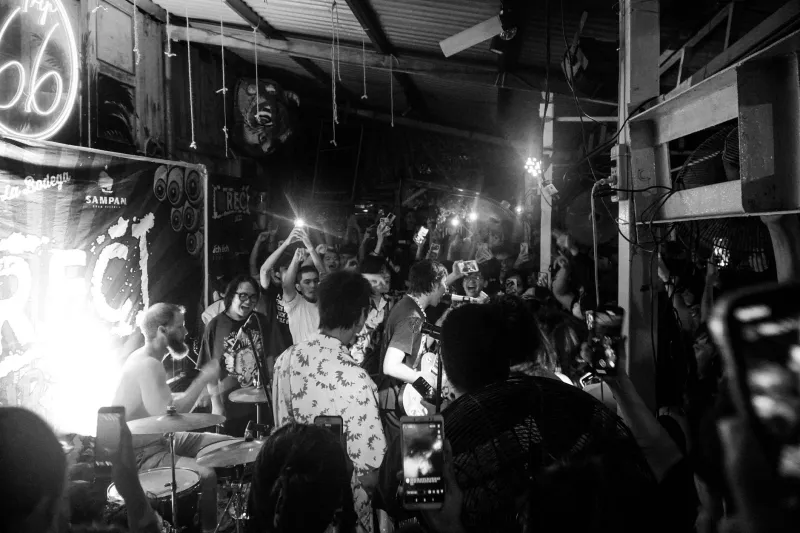
Last year, a mid-sized dark electronic festival in the American South — the kind of event that had spent a decade building a reputation for uncompromising programming and zero corporate presence — announced a new presenting sponsor. A spirits brand. The logo appeared on the website, on the stage banners, on the limited-edition merchandise. The festival's organizers put out a statement about "shared values" and "supporting independent music infrastructure." The community response was immediate, loud, and deeply split.
Some people said it was a sellout. Some said it was survival. Some said both things were true simultaneously and that the real problem was the economic conditions that made the choice necessary in the first place. All of them were right, in different proportions.
This is the conversation the dark music underground is having right now, whether it wants to or not.
The Money Finds the Gaps
Underground music scenes have always operated on scarcity — of money, of space, of mainstream attention. That scarcity was, for a long time, a kind of protection. If there's nothing to monetize, predatory capital tends to look elsewhere. But the dark music underground has grown. Not mainstream-grown, but grown enough that it's visible. Festivals draw thousands. Certain artists move serious units. Collector markets command real money. And where there's a market, there are people who want a piece of it.
The infiltration doesn't always look like infiltration. Sometimes it looks like a generous grant from a tech company's "artist support" initiative. Sometimes it looks like a brand partnership offer that seems almost reasonable — a clothing company that genuinely does have aesthetic overlap with the scene, a spirits label that's been advertising in underground music publications for years. Sometimes it looks like a venture-backed platform that promises better revenue splits than the existing options and then, six months in, starts making decisions that prioritize growth over community.
The entry points are varied. The destination tends to be the same.
The Influencer Problem
If corporate money is the blunt instrument of underground co-optation, influencer culture is the scalpel. And it's arguably more damaging, because it's harder to see coming and easier to rationalize.
Dark and alternative music aesthetics have been thoroughly colonized by lifestyle content over the past several years. The visual language of industrial music, black metal, and dark ambient — the imagery, the fashion, the symbolic vocabulary — circulates on TikTok and Instagram largely divorced from the music that generated it. Creators with significant followings adopt the aesthetic because it performs well, not because they have any meaningful connection to the culture. Brands follow the creators. The culture gets reduced to a look.
This has real consequences for the communities that developed those aesthetics. When a dark music venue becomes a backdrop for influencer content, it changes who shows up and why. When a genre's visual identity becomes a trend, it attracts people who want the surface without the substance — and those people's presence changes the spaces that were built for the substance. The original community gets crowded out, or it retreats further underground, or it fragments.
"We've had to start doing things we never thought we'd do just to keep the doors open," says the operator of a dark music venue in a mid-sized Midwestern city who asked not to be identified. "And every time we do, we lose a little bit of what made this place worth keeping open."
Venture Capital and the Platform Trap
The venture capital angle is newer but accelerating. A wave of music-adjacent platforms — some focused on community building, some on direct-to-fan commerce, some on event ticketing — have raised significant funding and are actively courting underground scenes as early adopters. The pitch is usually compelling: better economics than existing platforms, tools built specifically for niche communities, a genuine understanding of what independent artists need.
The problem is structural. Venture capital requires returns, and returns require scale, and scale requires the platform to grow beyond its original user base. The tools get generalized. The features that served the underground community get deprioritized in favor of features that appeal to a broader market. The fees go up. The algorithm changes. What started as an alternative to the mainstream infrastructure gradually becomes another version of it.
Artists and community organizers who built on these platforms find themselves in a familiar trap: they've grown dependent on infrastructure they don't control, and the people who control it have financial obligations that don't include protecting subcultural integrity.
The Authenticity Question Nobody Wants to Answer
Here's the uncomfortable part: some of the communities being infiltrated are complicit in their own infiltration, and not always because they're desperate.
The dark music underground, like all subcultures, has always had a complicated relationship with status. Credibility is currency. Access is power. When outside money arrives with the promise of amplifying that status — bigger stages, better production, wider reach — the temptation is real, even for people who know exactly what they're trading away.
There's also a class dimension that doesn't get discussed enough. The gatekeepers of underground music — the festival organizers, the label heads, the venue operators — are disproportionately people with enough financial cushion to absorb losses, take risks, and maintain purity of vision. For artists and community members who don't have that cushion, the calculation looks different. A brand deal might be the difference between making music and not making music. A sponsored event might be the only way a venue survives another year.
Criticizing people for making those choices, without acknowledging the conditions that produce them, is a luxury position. The real target of the critique should be the economic structure that turns survival into compromise.
Holding the Line, or Drawing a New One
Some communities are finding ways to resist that don't require choosing between purity and survival. Cooperative ownership models — venues, labels, and festivals structured as member-owned entities — create accountability structures that make it harder for outside money to gain controlling influence. Community investment campaigns, where fans and artists collectively fund the infrastructure they use, are another approach. A few scenes have developed explicit codes around what kinds of partnerships are acceptable and what kinds aren't, with real social consequences for violations.
None of these are perfect solutions. All of them require ongoing work and collective buy-in. But they represent something important: the recognition that the underground's best defense against monetization isn't purity — it's structure.
The dark music underground was never going to exist outside of money entirely. But there's a meaningful difference between an economy that serves the community and one that extracts from it. Knowing which one you're operating in, and being honest about it, is the first step toward doing something about it.
The highest bidder is always going to show up. The question is what you've already built that they can't buy.