Contraband Currency: Why Bootleg Recordings Are Worth More Than the Real Thing
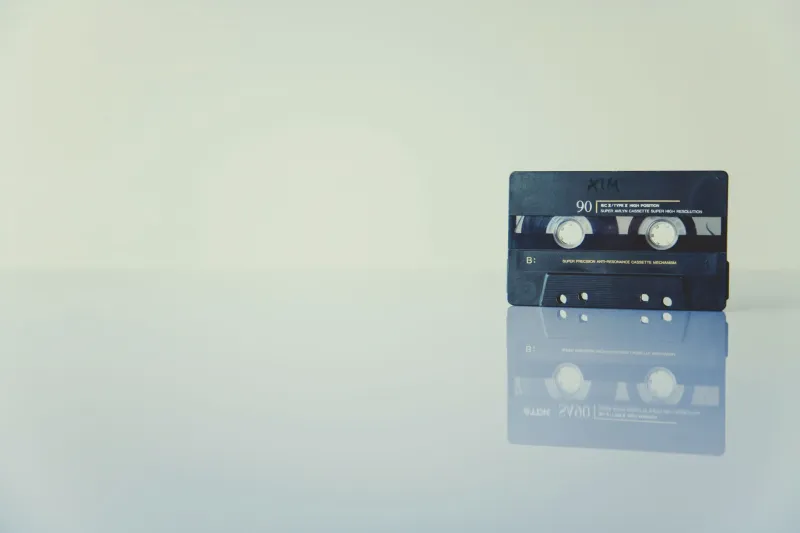
Somewhere in a storage unit outside of Chicago, a guy named Marcus has approximately 400 bootleg recordings stacked in archival sleeves, organized by artist, venue, and recording quality. He's been collecting since the early 90s. He has official releases too — shelves of them — but when you ask him which ones actually matter to him, he doesn't hesitate. "The boots," he says. "Always the boots."
Marcus isn't an outlier. Across the dark music underground — black metal, industrial, death industrial, power electronics, dark ambient, noise — bootleg recordings have quietly become the more trusted, more coveted, and often more financially valuable artifact. The official economy is losing ground to a parallel one built on unauthorized tapes, illicit live recordings, and contraband pressings. And a lot of people in the scene think that's exactly how it should be.
The Anatomy of a Bootleg Economy
Let's be clear about what we're talking about. This isn't someone uploading a shaky phone video to YouTube. The serious bootleg market for dark and underground music involves high-quality soundboard recordings smuggled out of venues, audience tapes captured on professional equipment, and unauthorized vinyl pressings of rare sessions that labels either sat on or buried entirely. Some of these recordings have been circulating in trade networks for decades. Others are newly minted and already commanding triple-digit prices.
The economics are genuinely strange. A legitimate pressing of a mid-tier black metal album might sell for $25 on Bandcamp. An unauthorized live tape of the same band — recorded at a 200-person show in Oslo in 1997, transferred to cassette, dubbed in limited quantities — can fetch $150 to $300 in collector circles. The scarcity is real. The demand is real. And crucially, the authenticity feels real in a way that official releases increasingly don't.
Part of what drives the premium is access. Dark music labels, particularly the smaller ones operating out of Europe and the American underground, have a long history of delayed releases, shelved projects, and contractual gridlock that keeps recordings from fans for years. Bootleggers don't wait for clearance. They fill the gap, and they do it fast.
Why Fans Trust Bootleggers More Than Labels
This is the part that should make label executives uncomfortable: a meaningful portion of the dark music audience has more faith in anonymous bootleggers than in the institutions nominally responsible for preserving and distributing music.
The reasons aren't hard to understand. Official labels — even the underground ones — operate under financial pressure that shapes what gets released and how. Recordings get shelved because of licensing disputes, because an artist had a falling out with management, because the market timing felt wrong, or simply because someone in charge didn't think it was worth the effort. Meanwhile, a devoted fan with a decent DAT recorder and a connection to a venue's sound desk just... releases it. No politics. No delay. No watered-down mastering job designed to appeal to a broader audience.
There's also a transparency argument. Bootleggers in tight-knit communities tend to be known quantities — not by name necessarily, but by reputation. Their recording quality, their sourcing ethics, their commitment to accurate documentation are all tracked and discussed in forums, Discord servers, and dedicated collector communities. A bad actor gets exposed. A reliable source builds a following. It's accountability without bureaucracy.
"Labels have given people every reason not to trust them," says one collector who runs a small tape distro out of Portland. "They reissue stuff with fake liner notes, they license things without the artist's knowledge, they let stuff go out of print and then act surprised when someone else steps in. The bootleg scene exists because there's a need that isn't being met."
The Contraband Pressing Underground
Live tapes are one thing. Unauthorized vinyl is a different beast entirely, and it's a growing one. In the last several years, there's been a noticeable uptick in bootleg pressings of rare or unreleased material from artists across the dark music spectrum — limited runs, hand-numbered, sometimes with original artwork that's better than what the official label produced.
These pressings exist in a genuinely gray legal space, and the people behind them know it. Most operate anonymously, selling through trusted intermediaries or at physical record fairs where cash changes hands and nobody asks too many questions. The markup is significant. The risk is real. But demand keeps the operation running.
What's interesting is that artists' responses to this vary wildly. Some are furious — understandably so, given that they see none of the revenue. Others are quietly appreciative, recognizing that the bootleg market keeps their older, harder-to-find work alive and in circulation. A few have gone further, tacitly acknowledging the existence of specific bootlegs in interviews or social media posts without explicitly endorsing them. It's a strange dance, but it reflects the complicated reality of underground music economics.
Reshaping the Artist-Fan Relationship
What the bootleg economy is really doing, underneath the financial transactions and the legal ambiguity, is restructuring how artists and fans relate to each other. In a scene where major label infrastructure barely exists and independent labels are stretched thin, bootleggers function as a kind of distributed archival system — preserving moments that would otherwise evaporate.
That preservation has value beyond the collector market. Live recordings of bands that no longer exist, rehearsal tapes that capture a sound that never made it onto an official release, radio sessions from the pre-internet era — these are primary sources. They document a culture that mainstream music history largely ignores. Bootleggers, whatever their motivations, are often the only people doing the work of keeping that history accessible.
For younger fans entering the dark music underground, bootlegs also function as initiation objects. Tracking one down requires knowing the right people, frequenting the right spaces, speaking the right language. The hunt itself is part of the value. You don't stumble onto a quality soundboard recording of a 1993 death industrial performance at a basement show in Detroit by accident. You earn it.
Marcus, back in his Chicago storage unit, puts it simply: "The official stuff tells you what a label wanted you to hear. The boots tell you what actually happened."
In the dark music underground, that distinction matters more than most people outside the scene would ever understand.