Signal in the Static: The Pirate Broadcasters Keeping Dark Music Alive on the Airwaves
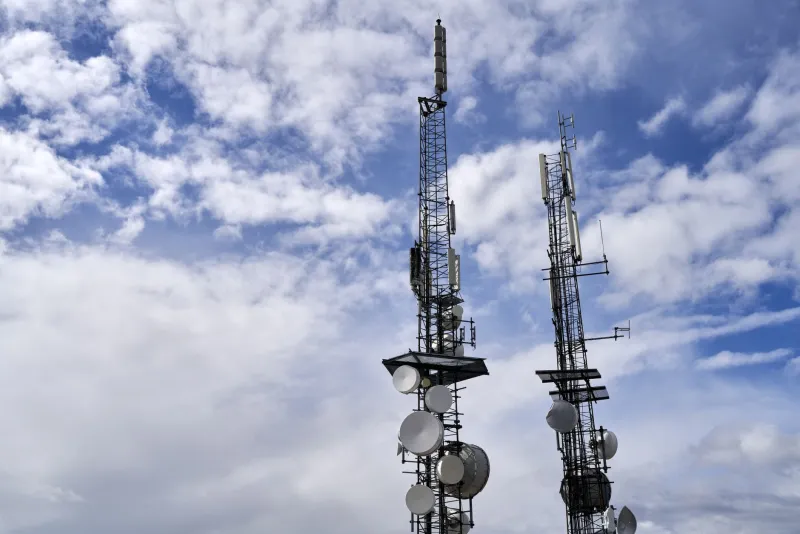
At 2 a.m. on a Tuesday, somewhere in the outer boroughs of New York City, a transmitter the size of a shoebox is pushing a signal out into the night. The programming has been running for three hours already — a dense, uninterrupted block of dark ambient, harsh noise, and early industrial that no licensed station in the tri-state area would touch with a ten-foot pole. The operator, who goes by a handle and declines to share anything else, figures maybe a few dozen people are actually tuned in. Maybe fewer. He doesn't particularly care.
"It's not about the audience," he says. "It's about the transmission existing at all."
This is pirate radio in 2024 — less a political act than a philosophical one, though the legal risks remain very real. Across the country, a scattered but committed network of unlicensed broadcasters, low-power FM operators, and shortwave enthusiasts are keeping experimental and underground dark music alive on the actual airwaves, in defiance of both the FCC and the basic logic of contemporary media consumption.
The Frequency Nobody Owns
American radio has been a corporate monoculture for so long that it's easy to forget what it was supposed to be. The FM dial in most major cities is a wasteland of syndicated formats, algorithmically optimized playlists, and morning shows designed to offend no one. The idea that radio could be a genuine discovery engine — that you might tune in and encounter something genuinely challenging, unfamiliar, or confrontational — has been effectively engineered out of the system.
Pirate operators fill that absence. They're not doing it for money. They're not building brands. They're broadcasting because the music they care about has nowhere else to go and because the act of transmission — the physical fact of a signal moving through air — feels meaningfully different from uploading something to Bandcamp or posting a playlist.
The FCC takes a dim view of unlicensed broadcasting. Fines start at $10,000 and can escalate from there. Equipment gets seized. In some cases, operators face criminal charges. The enforcement is inconsistent — the agency tends to prioritize stations that interfere with licensed broadcasters or emergency frequencies — but the risk is real, and everyone operating in this space knows it. Most take precautions: mobile setups, rotating locations, transmitters that can be killed in seconds.
"You learn to move fast," says one operator based in the Pacific Northwest who runs a rotating schedule of dark electronic and experimental music on a low-power FM frequency. "You also learn who your neighbors are and whether they're the type to call anyone."
Low Power, High Commitment
Not all underground radio is technically illegal. The FCC's Low Power FM (LPFM) program, established in 2000 and expanded in 2013, allows community organizations to operate small licensed stations with a range of roughly a few miles. It's a legitimate pathway, but it comes with its own bureaucratic weight — licensing applications, technical requirements, community accountability structures. The process filters out solo operators and rewards organizations with the patience to navigate it.
A handful of dark and experimental music advocates have done exactly that, building licensed LPFM operations that function as genuine community resources. In cities like Portland, Austin, and Philadelphia, these micro-stations have become anchor points for local underground scenes — places where new artists get their first airplay, where listeners discover connections between genres they'd never thought to link, where the DJ isn't following a format because there isn't one.
The listener numbers are small by any conventional metric. But in underground music, small and devoted beats large and indifferent every time. A station reaching 500 committed listeners in a dense urban neighborhood has more actual cultural impact than a streaming playlist with 50,000 passive adds. The people tuning in are paying attention. They're writing things down. They're showing up to shows afterward.
Shortwave and the Long Game
Then there's the weirder frontier: shortwave. While FM piracy is a primarily urban phenomenon, a small community of shortwave enthusiasts has been using the medium's extraordinary range to broadcast experimental and dark music across continental distances. A shortwave signal out of the American Midwest can reach Europe, South America, and beyond under the right atmospheric conditions. The aesthetic of shortwave — that characteristic warble, the way signals drift and bleed into each other across frequencies — has its own appeal to listeners already drawn to dark ambient and noise.
Broadcasters in this space often lean into the medium's strangeness. Programming might include long stretches of drone music interrupted by spoken-word transmissions, field recordings layered over industrial compositions, or archival material from the early days of experimental radio art. The listening experience is inherently unpredictable. You might tune in and catch something extraordinary. You might get static. That uncertainty is part of the point.
Some of these operators are in communication with each other, coordinating loose schedules and sharing technical knowledge through encrypted channels and old-school mailing lists. Others are entirely solitary, broadcasting into the ether with no particular interest in whether anyone is receiving. The act is the thing.
Discovery Engine for the Undiscoverable
For artists operating in the darkest corners of underground music — power electronics acts with no social media presence, noise projects that exist only as CDr releases, dark ambient composers who've never played a live show — pirate and LPFM radio represents something streaming platforms genuinely cannot: a discovery mechanism that doesn't require them to optimize for an algorithm.
Streaming discovery is fundamentally reactive. It surfaces what's already being listened to, amplifying existing momentum. Radio, even micro-scale radio, is curatorial in a different way. A DJ who cares about a specific artist can simply play them. No follower count required. No playlist placement fee. No engagement metrics. Just the music, moving through air.
Multiple artists in the dark music underground have traced meaningful portions of their audience to specific radio plays — a single broadcast on a pirate station in Detroit that led to a run of tape orders, a shortwave transmission that connected a composer in rural Minnesota with a label in Germany. These aren't flukes. They're the system working as intended, just outside the system.
Back in New York, the 2 a.m. transmission is wrapping up. The operator kills the signal, breaks down the setup, and heads home. Nobody called. Nobody texted. He has no idea how many people were listening. He'll be back next week, same frequency, same approximate time.
"The music deserves to exist in the world," he says. "Not just on a server somewhere. In the actual air."
Hard to argue with that.